

Grab a can of Coke off your fridge shelf right now, and you are holding a design that is been fine-tuned for decades. Every curve, every taper, every millimeter of that aluminum shell serves a purpose. Whether you are a designer sizing up a 3D model, a crafter building something clever, or you are just plain curious, this guide breaks down Coke can dimensions in full detail.
History of the Coke
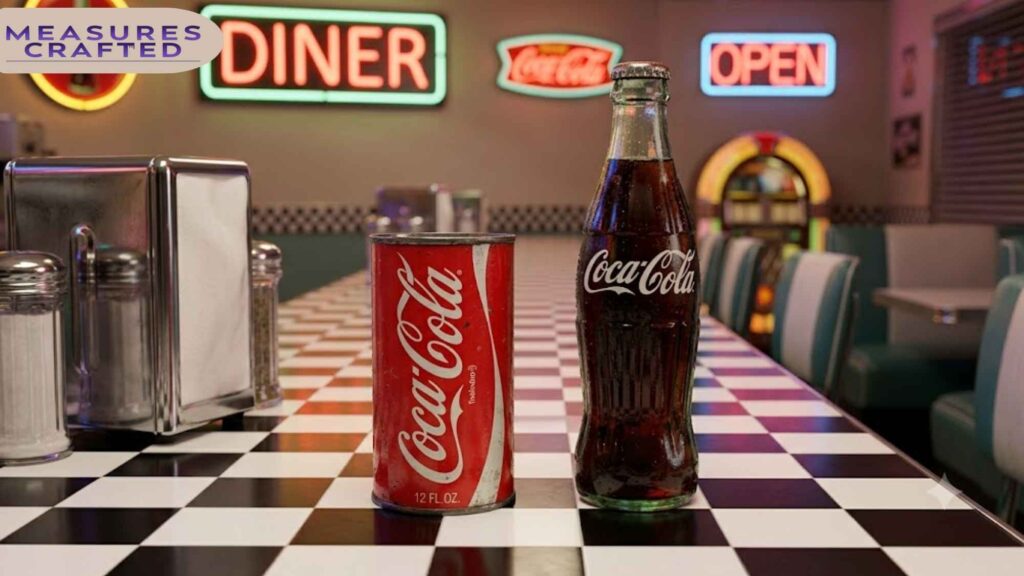
Coca-Cola started out in bottles, not cans — the drink itself dates back to 1886, invented by pharmacist John Pemberton in Atlanta, Georgia. Cans did not enter the picture until the 1950s, when Coca-Cola began packaging in steel.
The real shift came in the late 1950s and early 1960s, as the company transitioned to lighter, cheaper aluminum, setting the foundation for the standard 12 oz can we recognize today. Since then, the core dimensions have barely budged, even as new formats like minis, slims, and tall boys expanded the lineup around it.
Read more about, 5 Inches Explained with 15 Everyday Objects
The Standard 12 oz Coke Can, Measured Exactly

Let’s start with the one everyone knows. The standard Coke can that you find in vending machines and gas stations across America measures:
- Height: 4.83 inches (12.3 cm)
- Body diameter: 2.6 inches (6.6 cm)
- Circumference: roughly 8.15 inches (207 mm)
- Lid diameter: 2.13 inches (54 mm)
- Volume: 12 fl oz (355 mL)
A 12 oz Coke can is about as tall as a standard smartphone, but noticeably chunkier in the hand. That width to height ratio is not random, it is what makes the can easy to grip.
An empty can weighs around 0.5 ounces (14 grams). Fill it with soda, and it tips the scale closer to 13 ounces.
Why the Lid Is Narrower Than the Can Body

The body diameter sits at 2.6 inches, but the lid diameter shrinks down to just 2.13 inches. Why the difference?
It comes down to a manufacturing process called necking. Before the lid gets attached, the top of the can gets pressed inward through a series of dies, gradually tapering the opening. Manufacturers do this for one main reason: material savings.
Aluminum lids cost more per square inch than the can’s thinner body walls, so a smaller lid means less expensive metal used per can.
In the beverage can industry, this smaller opening is known by an “end size” code. The 202 end is standard on most 12 oz cans, referring to a 2.125-inch opening. You will sometimes see a slightly wider 204 end on specialty formats, though it is far less common.
You may also like, Pokémon Card Dimensions: Size Guide (Inches, MM, CM & Pixels)
Every Coke Can Size at a Glance

Coca-Cola does not stop at one size. Depending on where you shop and what you are craving, you will run into several different sizes.
| Can Type | Volume | Height | Diameter |
|---|---|---|---|
| Mini Coke can | 7.5 oz (222 mL) | ~3.5–4.2 in | ~2.1 in |
| Standard Coke can | 12 oz (355 mL) | 4.83 in | 2.6 in |
| Slim Coke can | 12 oz (355 mL) | ~6.1–6.6 in | ~2.25–2.3 in |
| Tall boy can | 16 oz (473 mL) | ~6.2 in | 2.6 in |
| Large can | 20 oz (591 mL) | ~7.5 in | ~2.87 in |
While the standard soda can dimensions (12 oz, 4.83″ x 2.6″) are locked in and consistent across every manufacturer, the exact height of mini and slim formats can shift slightly depending on the bottler and market.
Coke Can Sizes Around the World

The 12 oz Coke can dominates in the United States, but step outside the country and the standard changes completely.
| Country | ML | Height | Dimension |
|---|---|---|---|
| United States | 12 fl oz (355 mL) | 4.83 in | 2.6 in |
| Europe | 330 mL | 4.75–4.85 in | 2.6 in |
| Australia | 375 mL | 5.1–5.2 in | 2.6 in |
Discover more about, How Long Is 8 Inches? 20 Everyday Comparison That Make it easy
Notice the pattern? The body diameter stays locked at 66 mm (2.6 inches) almost everywhere in the world. Only the height changes to accommodate different volumes. That is not a coincidence — it lets Coca-Cola bottlers use largely the same manufacturing lines, filling equipment, and vending machine slots across different countries, just with taller or shorter molds swapped in.
Why the volume difference in the first place? It traces back to how each region adopted measurement systems. The U.S. built its soda culture around fluid ounces, landing on 12 as a practical single-serve number. Europe, working in metric, rounded to 330 mL. Australia settled on 375 mL based on local retail habits.
Slim Cans vs. Standard Cans — Same Drink, Different Shape
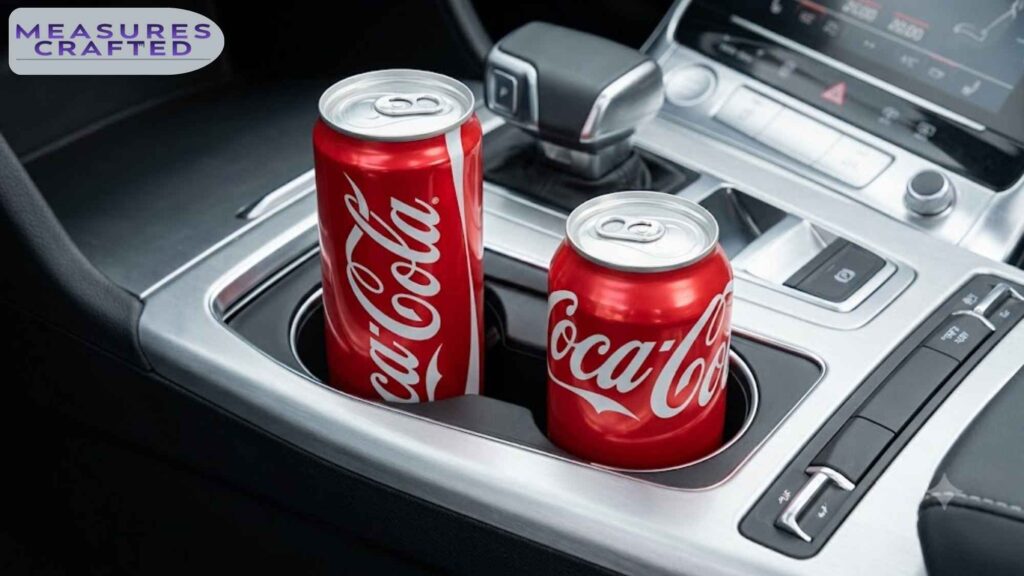
If you have ever picked up a slim Coke can, you probably noticed it feels totally different in your hand compared to the classic format.
It holds the exact same 12 oz (355 mL) of soda as a standard can. Coca-Cola did not shrink the recipe; they just re-engineered the shape. A typical slim soda can measures somewhere around 6.1 to 6.6 inches tall with a diameter closer to 2.25–2.3 inches, compared to the standard can’s stubbier 4.83 x 2.6 inch profile.
A few real reasons:
- Shelf differentiation — slim cans stand out next to a wall of standard cans, which matters for specialty or diet variants
- Premium positioning — the taller, sleeker shape reads as more modern, often used for products marketed toward a different demographic
- Cup holder trends — modern vehicle cup holders, especially in newer car models, are increasingly designed with narrower inserts that fit slim cans more snugly than the wider standard can
You will see this same slim-can trend across the wider beverage industry too — energy drinks like Red Bull use a similarly narrow 53mm diameter, which is part of why a Red Bull and a slim Coke can feel so similar in the hand despite being completely different products.
Check out our guide on, How Big Is a Monster Can? Dimensions, Sizes, and Comparisons
How Coke Can Dimensions Have Changed Since Aluminum Took Over

Coca-Cola did not start with the can shape we know today. Early cans were made of steel, heavier and less efficient to produce. The shift to aluminum construction changed the manufacturing process significantly — aluminum is lighter, cheaper to ship, and easier to recycle.
Since that transition, the 12 oz Coke can’s core dimensions — 4.83 inches tall, 2.6 inches in diameter — have stayed remarkably stable. What has changed is the can’s wall thickness and overall weight.
This kind of gradual material reduction, sometimes called “lightweighting” in the packaging industry, has let companies cut costs and reduce environmental impact while keeping the can’s external size and shape unchanged for consumers.
The bigger visible shift has been in format variety, not dimensions. Mini cans, slim cans, and tall boys all emerged over time to meet consumer habits — smaller portions for health-conscious drinkers, taller sleek shapes for premium branding.
Coke Can vs. Other Beverage Cans
A Coke can and a Pepsi can share nearly identical specs — both stick to the 4.83 x 2.6 inch standard for their 12 oz formats. The industry largely settled on shared end size codes (like the 202 end), letting manufacturers run the same filling lines and vending machine slots across brands.
Energy drinks tell a different story. Monster keeps the wider 66mm body for a bulkier grip, while Red Bull goes narrower at 53mm for a sleeker feel.
| Brand | Diameter | Profile |
|---|---|---|
| Coke (standard) | 66mm (2.6 in) | Classic |
| Pepsi (standard) | 66mm (2.6 in) | Classic |
| Monster | 66mm (2.6 in) | Bulky |
| Red Bull | 53mm (2.09 in) | Slim |
These small width differences are not random — they are deliberate design choices, shaping how each drink feels in your hand.
See also, 20 Things That Are 18 Inches Long With Real-World Examples
Practical Uses for Knowing Coke Can Dimensions
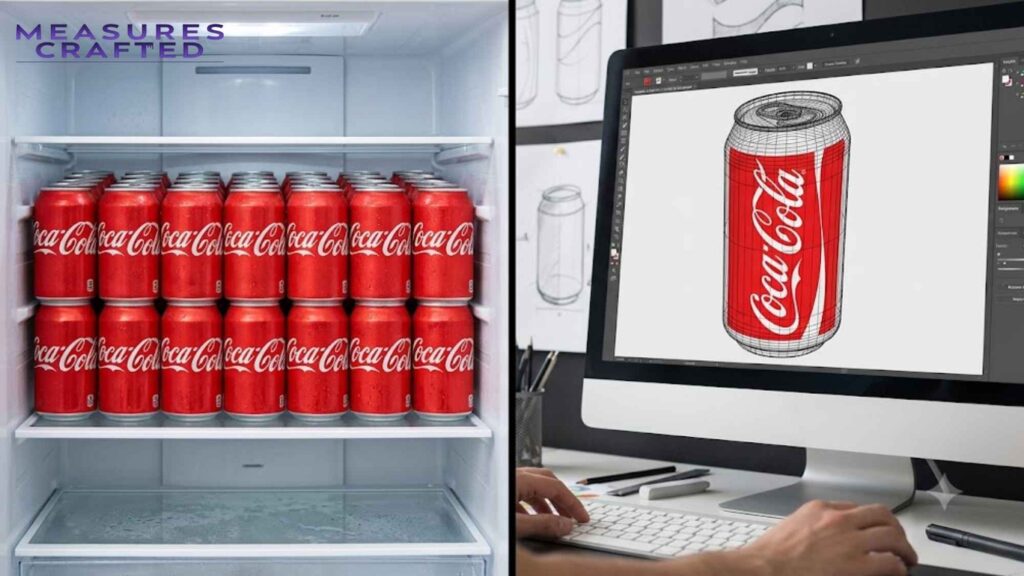
Here is where Coke can measurements actually come in handy:
- Fridge and cooler planning — knowing a standard can needs about 5 inches of vertical clearance helps you figure out exactly how many will fit on a shelf
- Cup holder compatibility — if your car’s cup holder is on the tighter side, you will know a slim can fits better than a standard one
- Shipping and packaging math — anyone building custom boxes or coolers for bulk soda needs accurate beverage can dimensions to avoid wasted space
- 3D modeling and design work — graphic designers and product mockup artists rely on precise dimensions to render realistic cans
How to Measure a Can Yourself
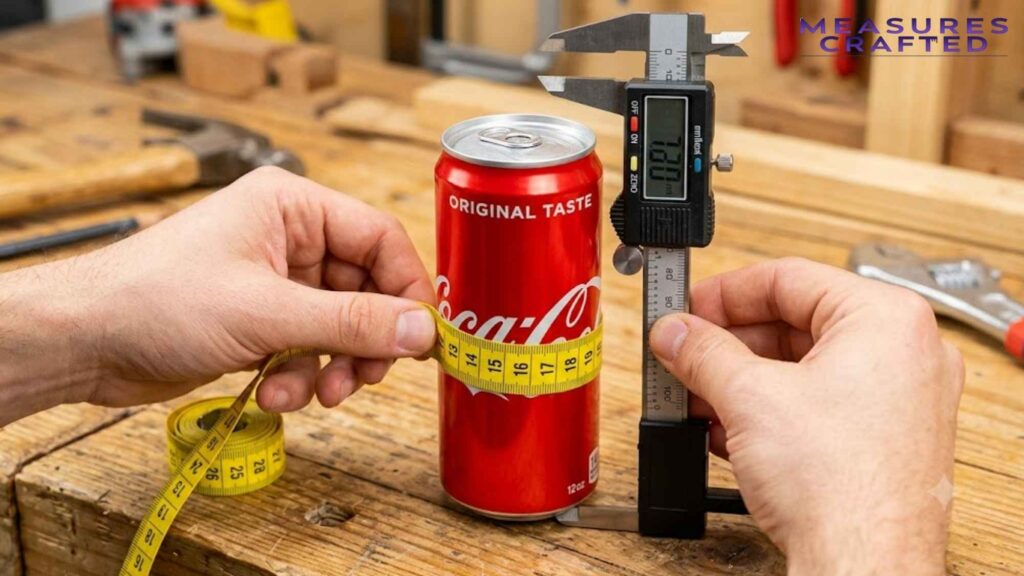
Want to double-check any of these numbers?
- Stand the can upright and measure from the base to the top rim (skip the pull tab) for height
- Wrap a soft measuring tape around the middle — the widest point — for circumference, then divide by pi (3.14) to get diameter
- Take three measurements at slightly different spots and average them, since manufacturing tolerances mean no two cans are pixel-perfect identical
This process is how the figures in this guide were verified.
Want to learn more? 20 Everyday Things That Are 10 Inches Long
Quick Quiz: How Well Do You Know Coke Can Dimensions?
Test yourself with these quick questions.
1. How tall is a standard 12 oz Coke can
a) 4.13 inches b) 4.83 inches c) 5.63 inches
2. What is the diameter of a standard Coke can’s lid?
a) 2.13 inches b) 2.60 inches c) 3.10 inches
3. Which region uses a 375 mL standard can?
a) Europe b) United States c) Australia
4. What manufacturing process creates the narrower lid on a Coke can?
a) Necking b) Drawing c) Lightweighting
5. What stays constant across almost every global Coke can size, regardless of volume?
a) The height b) The body diameter c) The lid color
Answers
- b) 4.83 inches
- a) 2.13 inches
- c) Australia
- a) Necking
- b) The body diameter
Curious about this? How Long Is 11 Inches? 25 common Things And Conversion Guide
Conclusion
A Coke can looks like a simple cylinder at first glance. Look closer, though, and you will spot decades of engineering — from the necked-in lid that saves aluminum, to the steady 2.6-inch diameter that lets the same equipment fill cans across continents. Whether you are comparing a mini can to a tall boy or just satisfying your curiosity, these Coke can dimensions stay remarkably consistent.
Frequently Asked Questions
Here are some common questions about this topic, answered simply and clearly.
How many standard Coke cans fit in a 24-pack case?
A standard 24-pack case holds cans in a 4×6 or similar grid, sized to fit the 2.6-inch diameter snugly with minimal wasted space.
What material is a Coke can made from?
Modern Coke cans use aluminum, typically a mix of new and recycled metal, which replaced the heavier steel cans used decades ago.
Does can size affect how Coke tastes?
Not directly, but taller, narrower cans expose less surface area to air per sip, which some drinkers say keeps carbonation feeling fresher longer.
Learn more about, Dead Sea Dimensions: Full Picture Behind World’s Saltiest Lake

Hi, I’m Adam Nicholas, and I lead the Dimensions category here at Measures Crafted. I love breaking down height, width, and depth into comparisons that actually click — because a number on its own rarely tells the full story. My goal is to help you see the bigger picture, quite literally, so every dimension makes sense the moment you read about it.