

Numbers on a page rarely mean much until you tie them to something you have actually seen. That is the problem with 500 feet. Say it out loud, and it sounds impressive, but does it actually click? Probably not.
So let’s fix that by walking through 19 things that measure close to 500 feet, some you would expect, and a handful you almost certainly have not seen compared this way before.
How Long Is 500 Feet, Really?
Here is a quick table so you do not have to do the math yourself.
| Unit | Equivalent to 500 Feet |
|---|---|
| Meters | 152.4 m |
| Yards | 166.67 yd |
| Inches | 6,000 in |
| Miles | 0.0947 mi |
| Kilometers | 0.1524 km |
500 Feet Comparisons you Won’t Find Anywhere Else
Most articles on 500 feet length recycle the same handful of examples. These four do not show up nearly as often, and honestly, they are some of the easiest to picture.
Check out our guide on, How Big Is a Monster Can? Dimensions, Sizes, and Comparisons
Two and a Half Hockey Rinks Laid End to End
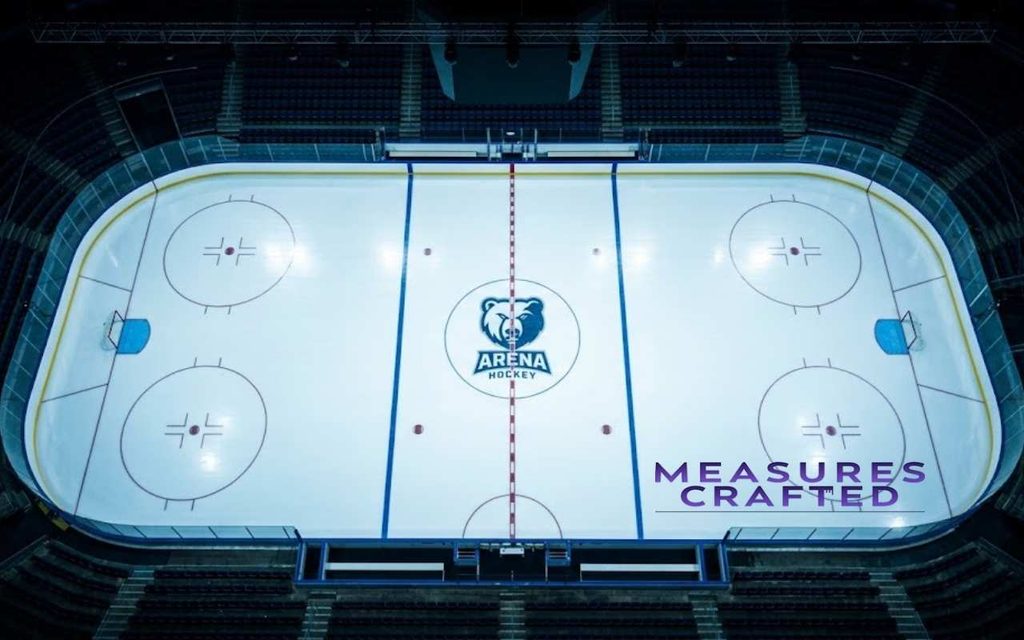
An NHL rink measures exactly 200 feet from end to end, a number the league has kept standard for decades. Line up two and a half of them, and you land right at 500 feet. If you have ever watched a game and thought the ice looked long, now you know: it takes 2.5 of them to hit this 500 ft comparison.
Two Boeing 747 Jets Nose to Tail
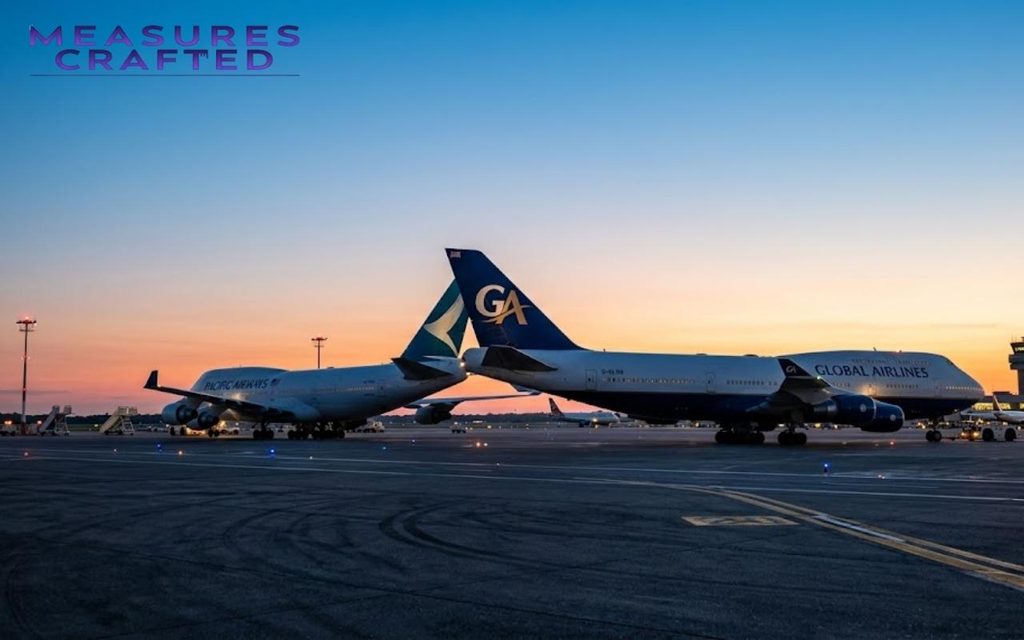
The Boeing 747-8, the longest version of the “Jumbo Jet” ever built, stretches 250.2 feet from nose to tail. Park two of them nose to tail on the tarmac, and you get just over 500 feet, a striking image next time you are waiting at the gate and one taxis past.
The Great Pyramid of Giza’s Original Peak

Here is a fact that surprises people: the Great Pyramid of Giza originally stood 481 feet tall when it was completed around 2560 BCE. Erosion and the loss of its polished limestone capstone have shaved it down to roughly 455 feet today.
In its prime, though, it was just 19 feet short of the full 500-foot mark, a distance visualization that puts ancient engineering into serious perspective.
Seven Semi-Trucks Parked Bumper to Bumper

A standard semi-truck, tractor and trailer combined, runs about 70 to 75 feet long under U.S. federal length limits. Park seven of them bumper to bumper along a highway shoulder, and you will cover roughly 500 feet, a familiar transportation reference for anyone who’s sat behind a line of trucks at a weigh station.
“Scale is not something you understand until you stand next to it.” That is true whether you are looking at a pyramid or a parking lot full of trucks.
See also, 20 Things That Are 18 Inches Long With Real-World Examples
500 feet in Sports and Recreation Distances
Sports fields and pools give us some of the most intuitive everyday examples of length, mostly because so many people have stood on or swum in one.
One and a Half Football Field Lengths
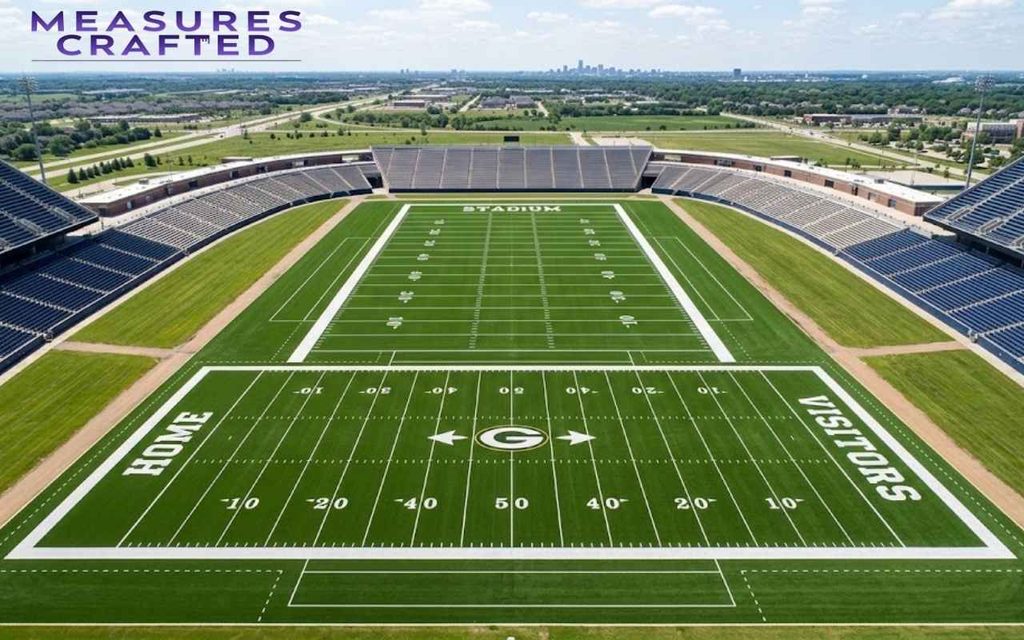
An American football field measures 360 feet from the back of one end zone to the back of the other. That means 500 feet covers about one and a half fields, a football field length comparison that clicks instantly for sports fans.
Three Olympic-Size Swimming Pools
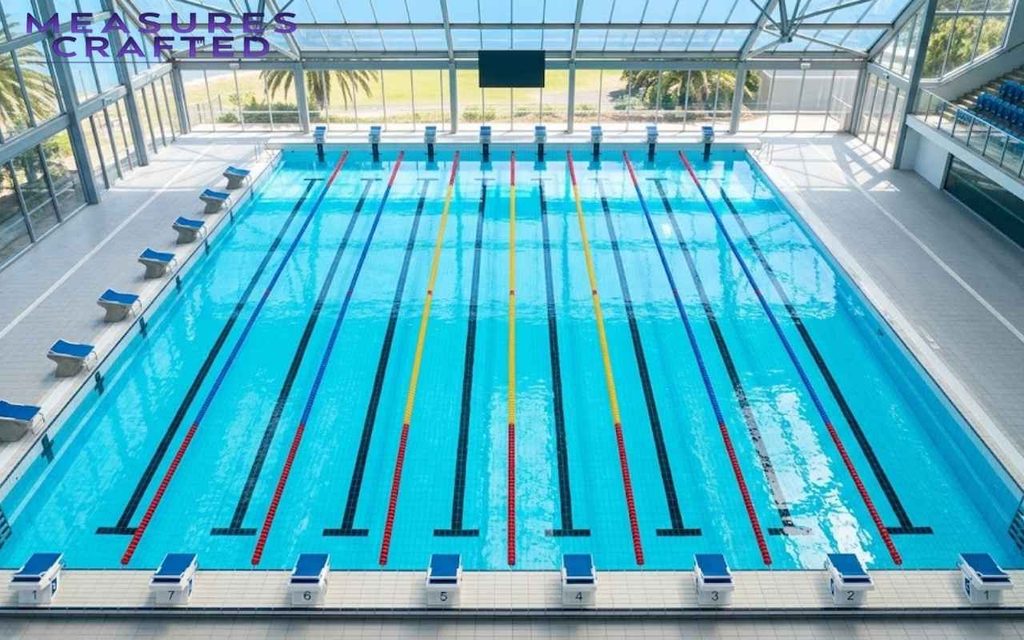
An Olympic swimming pool is standardized at 50 meters, which converts to 164 feet. Three of these pools placed end to end add up to 492 feet, just shy of the full 500. It is one of the cleanest pool comparison examples out there because the measurement is internationally fixed, not an estimate.
A Stretch of the Athletics Running Track

A standard outdoor track measures 400 meters (1,312 feet) around. A 500-foot stretch covers a little more than one full straightaway plus part of a curve, roughly 38% of a complete lap. Next time you watch a track meet, picture the runners covering that same ground in under 15 seconds at a sprint.
Buildings and City Skylines
Vertical comparisons hit differently than horizontal ones. Looking up 500 feet feels far more dramatic than walking the same distance on flat ground.
A 50-Story Skyscraper Standing Tall

Most commercial high-rises average 10 feet per floor, once you account for ceiling height, flooring, and mechanical space between levels. Do the math, and a 50-story building lands right around 500 feet, making it a solid mental shortcut for building height whenever a new tower gets announced in your city.
Want to learn more? 20 Everyday Things That Are 10 Inches Long
The Bottom Half of the Eiffel Tower

The Eiffel Tower rises 1,063 feet to its structural summit, or 1,083 feet if you count the broadcast antenna on top. Half of that structural height, about 500 feet, lands you roughly at the second observation platform, a spot that draws millions of visitors every year for its sweeping views over Paris.
The Gateway Arch’s Base-to-Base Width

The Gateway Arch in St. Louis stands 630 feet tall and spans exactly 630 feet at its base, since it was built as a perfect, weighted catenary curve. A 500-foot span covers roughly 80% of that base width, a useful reference for one of America’s most recognizable architectural landmarks.
Transportation and Everyday Vehicles
Vehicles and infrastructure make length easy to grasp because most of us interact with them daily.
Twelve and a Half Yellow School Buses

A standard school bus measures about 40 feet long. Line up 12.5 of them nose to tail, and you have covered 500 feet exactly, one of the most relatable transportation reference comparisons around, especially for parents who have watched a line of buses pull out of a school parking lot.
Half the Length of a Modern Cruise Liner

Today’s largest cruise ship vessels, like Royal Caribbean’s Icon-class ships, stretch close to 1,198 feet. Half of one of these floating cities equals almost exactly 500 feet, a genuinely staggering thought the next time you see one docked in port.
A Section of Airport Runway Tarmac

Commercial runways typically run between 6,000 and 12,000 feet, depending on the airport and aircraft it serves. A 500-foot section represents just a small slice of that total length, roughly equivalent to the runway safety margin required at the threshold of many regional airports.
Curious about this? How Long Is 11 Inches? 25 common Things And Conversion Guide
Nature and Massive Objects
Nature does not need much help looking impressive, but a little context never hurts.
Five Blue Whales Nose to Tail

The blue whale, the largest animal known to have ever lived, typically reaches 80 to 100 feet in length as an adult. Line up five of them nose to tail, and you will cover around 500 feet, a marine animals comparison that puts their sheer scale into perspective.
A Seagoing Cargo Barge

Large ocean-capable barges used for hauling freight, construction materials, or oil equipment often run between 400 and 500 feet long. A vessel at the top of that range hits our benchmark almost exactly, making it one of the more direct vessel dimensions comparisons on this list.
A Large Commercial Shipping Dock

Ports built to service oceangoing cargo ships often construct berths and docks stretching 500 feet or more, giving vessels enough room to load, unload, and maneuver safely. It is a practical, working-world example of this distance in action every single day at ports worldwide.
500 Feet Across City Layout and Public Spaces
Urban environments give us some of the most walkable, tangible ways to picture this distance.
Two and a Half City Blocks Downtown
City block length varies by city, but a common U.S. average sits around 200 feet per block in a standard grid layout. Two and a half of them add up to 500 feet, a handy urban navigation trick for estimating walking distances downtown.
A Long Stretch of Urban Main Street
Picture a typical downtown Main Street: 500 feet usually covers a handful of storefronts, a mid-block crosswalk, and maybe a bus stop or two. It is roughly the distance you would walk between two subway entrances on the same avenue in a mid-sized city.
Interested in learning more? Dead Sea Dimensions: Full Picture Behind World’s Saltiest Lake
The Length of a Public Fishing Pier
Many small-town public pier structures that extend from the shoreline into open water measure somewhere in the 400-to-600-foot range, enough to reach past the shallows into deeper fishing water without requiring a massive support structure underneath.
500 Feet Quiz
Think you have got a feel for 500 feet now? Test yourself with a few quick questions below.
1. How many feet long is a standard NHL hockey rink?
A) 150 feet B) 200 feet C) 250 feet D) 300 feet
2. What was the original height of the Great Pyramid of Giza before erosion?
A) 455 feet B) 500 feet C) 481 feet D) 630 feet
3. How many school buses, lined up nose to tail, equal roughly 500 feet?
A) 8 buses B) 10 buses C) 12.5 buses D) 15 buses
4. What is five hundred feet in meters?
A) 100 meters B) 152.4 meters C) 200 meters D) 166.67 meters
5. Roughly how many Olympic-size swimming pools placed end to end equal five hundred feet?
A) 2 pools B) 3 pools C) 5 pools D) 7 pools
Answers:
- B) 200 feet
- C) 481 feet
- C) 12.5 buses
- B) 152.4 meters
- B) 3 pools
Final Thoughts on Visualizing 500 Feet
Once you have got a few of these comparisons in your back pocket, distance stops being abstract. Whether you picture two jumbo jets parked nose to tail or a pyramid that came just short of the mark thousands of years ago, 500 feet becomes something you can actually see in your mind rather than just read as a number. That is the whole point of measurement, really: turning figures into something real.
Frequently Asked Questions About 500 Feet
Still have a few questions about how 500 feet stacks up? Here are the ones people ask most.
How many steps does it take to walk 500 feet?
The average adult stride covers about 2.5 feet, so it takes roughly 200 steps to cover 500 feet. That number shifts a bit depending on height and walking speed, but 200 steps is a solid rule of thumb for most people.
How long does it take to walk 500 feet?
At a typical walking pace of around 3 miles per hour, covering 500 feet takes about 35 to 40 seconds. Slow down for a casual stroll, and you are looking at closer to a minute.
Is 500 feet a typical range limit for a home Wi-Fi router?
Not quite. Most consumer routers max out at around 150 to 300 feet indoors before the signal weakens too much to be useful, and even less through multiple walls.
Outdoors, with a clear line of sight, some routers can push signal out toward 500 feet, but that is closer to the outer edge of what standard home equipment can handle.
Discover more about, 21 Everyday Objects That Show You Exactly How Big 2 Inches Is

Hi, I’m Maya Winston, and I run the Measurements category here at Measures Crafted. I’ve always been fascinated by how numbers translate into real-world scale — there’s something satisfying about finally getting how big or how far something actually is. My goal is to make every measurement feel intuitive, not intimidating, so you walk away with a clearer picture every time you visit.