

Numbers on a tape measure don’t mean much until you attach them to something real. Someone tells you a distance is 100 feet, and your brain just kind of… shrugs. Is that short? Long? About the size of your living room, or closer to a city block?
That’s exactly what this guide fixes. Below, you’ll find a full breakdown of 100 feet in meters, 100 feet in inches, and 100 feet in yards, plus 18 real-world objects that measure exactly (or almost exactly) 100 feet — so the next time someone throws that number at you, you’ll have an instant mental picture.
Quick Conversion: How Long Is 100 Feet in Other Units?
Before diving into the list, here’s the length of 100 feet broken down into every unit you’re likely to need. Bookmark this table — it’s the fastest way to visualize 100 feet without doing any math yourself.
| Unit | Equivalent Value |
|---|---|
| Meters | 30.48 meters |
| Yards | 33.33 yards |
| Inches | 1200 inches |
| Centimeters | 3,048 cm |
| Miles | 0.019 miles |
| Kilometers | 0.0305 km |
A quick note on the math, since it comes up constantly: one foot equals 0.3048 meters, so multiplying 100 by that figure gives you the feet to meters conversion of 30.48.
Same logic applies to the feet to inches conversion — there are 12 inches in a foot, so 100 × 12 lands you at exactly 1200 inches.
And for the feet to yards conversion, since a yard is 3 feet, dividing 100 by 3 gives you that recurring 33.33 yards figure.
How Tall Is 100 Feet?
Most people picture length horizontally, but 100 feet works just as well measured straight up. A mid-size municipal water tower typically stands close to this height, as does a transmission tower along a stretch of power lines.
The 100 ft tall mark shows up in infrastructure more often than people notice, mostly because it’s a practical engineering sweet spot — tall enough to serve its purpose, short enough to build without major structural complexity.
Vertical distances are consistently harder for people to judge accurately than horizontal ones. Standing at the base of something and looking straight up distorts depth perception in a way that walking a flat distance doesn’t, which is part of why height estimates for the same object can vary wildly from person to person.
Discover more about, 21 Everyday Objects That Show You Exactly How Big 2 Inches Is
How Much Is 100 Feet?
This question comes up a lot when someone’s trying to figure out how much is 100 feet in relation to something they already understand. The simplest way to think about it: 100 feet is short enough to walk in under 30 seconds, but long enough that you’d need a solid throw to get a ball from one end to the other.
In practical terms, 100 feet sits right in that awkward middle zone between “close” and “far” — too long to eyeball accurately, but too short to feel like a real journey. That in-between quality is exactly why comparisons work better than the raw number ever will.
Why Humans Struggle to Picture 100 Feet
Here’s the thing about distance estimation: our brains are decent at judging short distances (a few feet) and okay at judging very long ones (a mile or more), but the middle ground — anywhere from 50 to 300 feet — is where most people’s guesses fall apart.
Psychologists who study spatial estimation have found that without a reference object nearby, people routinely misjudge medium distances by 20% or more in either direction. That’s why sports commentary and construction blueprints lean so heavily on comparisons rather than raw numbers.
Telling someone a distance is “100 feet” means almost nothing on its own. Telling them it’s about the length of a bowling lane clicks immediately.
18 Things That Are 100 Feet Long
Below are 18 objects 100 feet long, split into two unique comparisons you won’t find on most 100 feet comparison lists, followed by 16 of the most commonly cited examples.
Half the Length of an NHL Hockey Rink

A regulation NHL rink measures exactly 200 feet from end boards to end boards. That means the distance from the center red line to either goal line sits right around 100 feet. If you’ve ever watched a hockey game and seen a player fire a slap shot from center ice, that puck traveled close to hundred feet before it even reached the attacking zone.
The Typical Depth of a Suburban House Lot

In a lot of U.S. residential zoning codes, particularly in older suburban developments built during the mid-20th century, a standard house lot runs about hundred feet deep from the front property line to the back.
Some newer developments trim that down to 80 or 90 feet to fit more homes per acre, but 100 feet remains a common benchmark you’ll see referenced in property surveys and real estate listings.
Check out our guide on, How Long Is 500 Feet? 19 Real-World examples You Can Picture
Five Yellow School Buses in a Row

A standard American school bus runs about 20 feet long, so line up five of them nose to tail and you’ve hit hundred feet almost exactly. This is one of the most relatable 100 foot examples simply because nearly everyone has seen a school bus parked at a curb.
Imagine five buses standing in a straight line with each bus touching the one in front of it. Their combined length gives you a simple visual idea of how much space 100 feet takes up.
About a Third of a Football Field

An American football field measures 300 feet between end zones (100 yards), which puts 100 feet on a football field at roughly one-third of the total playing distance — about the space between the goal line and the 33-yard line.
Next time you’re watching a game, that’s your visual reference. You can use the yard lines to estimate this distance without needing to measure it yourself. It also helps show why 100 feet is a substantial distance, even though it covers only part of the field.
A Ten-Story Building

As mentioned above, 100 foot building height typically lines up with a ten-story structure. This comparison works especially well in cities, where mid-rise buildings in that range are everywhere.
If each floor averages around 10 feet from one level to the next, ten floors add up to approximately hundred feet. Actual building heights can differ depending on ceiling heights, rooftops, and architectural design.
Seven Mid-Size Cars Bumper to Bumper

The average sedan runs about 14-15 feet long including bumper clearance. Line up seven of them and you’re sitting right at hundred feet, give or take a few inches depending on the models.
Picture a row of cars parked closely together in a straight line, with each vehicle facing the same direction. This comparison is especially helpful when you’re trying to imagine the length of a parking area or driveway.
See also, How Small Is 2mm? 17 Real-World Examples to Compare
A Bowling Lane With Room to Spare

A regulation bowling lane measures 60 feet from the foul line to the head pin, but including the approach area where bowlers take their steps before releasing the ball, the total setup stretches close to hundred feet. The approach gives players enough room to walk forward and prepare for their shots.
Imagine standing at the back of the approach and looking all the way toward the pins at the opposite end. This makes a bowling alley a familiar indoor reference for visualizing a long distance.
An NBA Court From Baseline to Baseline

A regulation NBA basketball court measures 94 feet long. It’s not exactly 100 feet, but it’s close enough that it’s become one of the most frequently cited 100 ft examples in comparison articles — worth knowing the real number is 94, not 100, if precision matters to you.
The difference is only 6 feet, which makes the court a convenient way to picture a distance close to 100 feet. Imagine standing at one baseline and looking straight across to the other end of the court.
A Fully Grown Oak or Cottonwood Tree

Mature oak trees, and especially eastern cottonwoods, regularly reach heights of 80 to 100 feet at full maturity. Cottonwoods in particular are known for shooting up fast, sometimes reaching that mark in under 50 years.
A tree this tall can stand as high as a ten-story building, giving you a clear idea of its impressive height. Looking up from the trunk can help you appreciate how much vertical space 100 feet represents.
Two Loaded Semi-Trucks, Nose to Tail

A semi-truck with a standard trailer measures roughly 70-75 feet total. Two of them parked back to back don’t quite reach 100 feet on their own, but a single semi-truck and trailer plus a compact car parked behind it gets you close to the full mark — one of the more useful large structures comparisons for anyone picturing highway distances.
An Olympic Swimming Pool, Wall to Wall

An Olympic-regulation pool measures 164 feet long (50 meters), so 100 feet covers a little over half the pool’s total length — roughly two lengths of a standard 25-yard recreational pool. Imagine standing at one end of the pool and looking toward a point a little beyond its halfway mark.
This gives you a clear visual reference for how far 100 feet stretches across a large swimming area. The pool’s lane markings can also help you estimate the distance more easily.
Want to learn more? 18 Everyday Things That Are About 9 Inches Long
A Fire Truck’s Ladder at Full Extension

Aerial fire trucks used in urban firefighting commonly extend to 100 feet, which allows crews to reach the upper floors of mid-rise buildings during rescue operations.
This is one of the more functional, real-world applications of the measurement. When fully extended, the ladder can stretch high above the ground and reach areas that ordinary ladders cannot. Its height gives you a practical example of how 100 feet can be useful in emergency situations.
Five Road-Ready RVs Parked Together
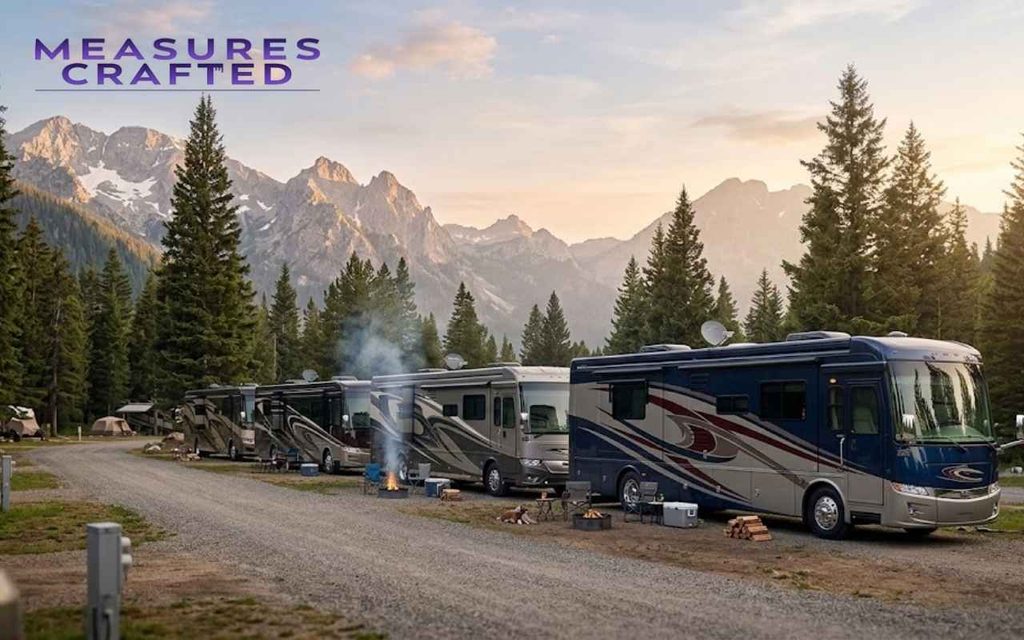
A standard Class A motorhome runs about 30-35 feet, so roughly three of them lined up gets you close to 100 feet. Smaller travel trailers, at 20 feet each, would need five in a row to match the distance.
Imagine several recreational vehicles parked nose to tail in a straight line at a campground. Their combined length shows how much space a group of large vehicles can occupy.
A Tennis Court Plus the Baseline Runoff
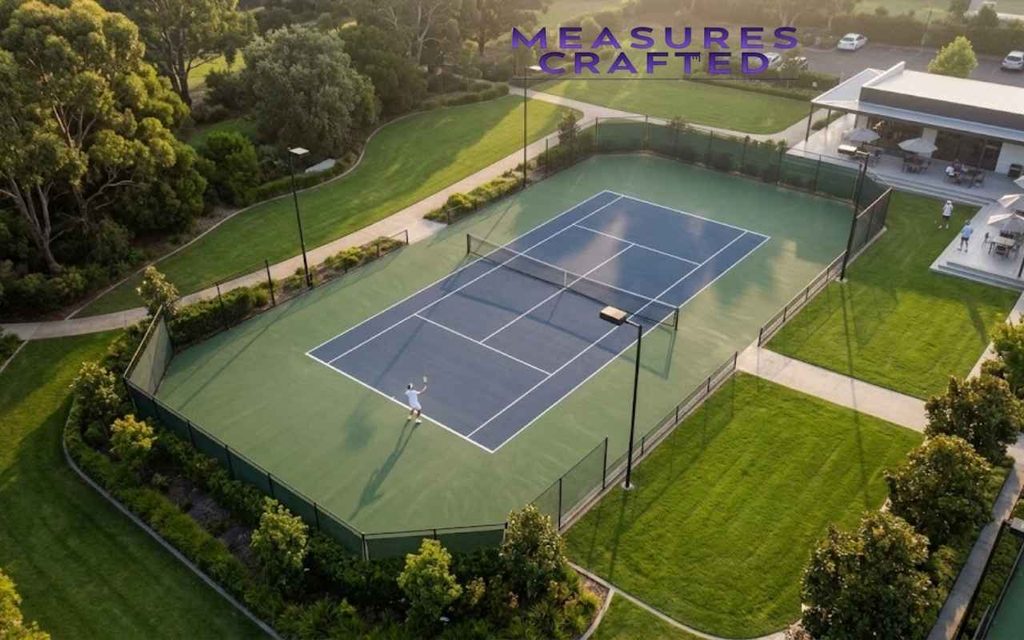
A regulation tennis court measures 78 feet long, but factor in the recommended runoff space behind each baseline (typically around 21 feet total) and you land almost exactly at 100 feet — a detail most casual players never think about.
These extra spaces give players room to move safely beyond the court’s playing lines. Picture the full area from the back of one runoff zone to the back of the other. It shows how the space needed for a sport can extend beyond the court itself.
A Sizable Private Yacht, Bow to Stern

Luxury yachts in the 100-foot class represent a specific and recognizable size tier in the boating world, often featuring multiple decks, crew quarters, and enough space for 8-10 guests comfortably. A yacht of this length can have separate areas for dining, relaxing, and sleeping.
Imagine a vessel stretching the length of a large city bus several times over while resting alongside a dock. This comparison helps make the size of a 100-foot yacht easier to picture.
About 40 Average Adult Strides

The average adult walking stride covers roughly 2.5 feet. Multiply that out and you get around 40 steps to cover 100 feet — a handy trick if you’re ever trying to estimate a distance without a tape measure.
Your actual number of steps may be higher or lower depending on your height and walking style. Try walking a distance you know is 100 feet to see how closely your stride matches this estimate.
Curious about this? How Big Is 1 Inch? 18 Everyday items That Show you How Big It Is
The Length of a Small Apartment Complex

Smaller residential apartment buildings, particularly older three- to four-story walkups common in urban neighborhoods, often run close to 100 feet along their street-facing façade. Imagine standing on the sidewalk at one corner and walking along the front of the building to the opposite end.
This gives you a practical way to visualize the distance using a structure you might see in a city neighborhood. The actual length depends on the building’s design and the number of apartments it contains.
A Boeing 727’s Wingtip-to-Wingtip Span

The Boeing 727-100, one of the most widely used commercial aircraft of the 1960s and 70s, has a wingspan of about 108 feet — remarkably close to the 100-foot mark, and a great reference point for anyone picturing aircraft dimensions. The wings extend outward from both sides of the aircraft, making the plane much wider than its main body.
Imagine the distance from one wingtip to the other while the aircraft is parked on an airport apron. This comparison helps show how 100 feet can span a surprisingly wide space.
The 100 Feet Challenge
Here’s a fun way to test your own spatial estimation. Pick a spot, and without measuring, try to mark off what you think is 100 feet. Then measure it. Most people are off by a noticeable margin on their first try, usually underestimating, since medium distances tend to look shorter than they actually are from a stationary viewpoint.
For a second version, try the throwing challenge instead of walking. Grab a ball and see how many throws it takes to cover 100 feet in a straight line. Most people need three to four solid throws to close that gap, and testing it with a friend turns a simple estimation drill into a genuinely competitive game. Both versions train the same skill: your eye gets better at judging distance the more often you check your guess against the real number.
Conclusion
100 feet shows up more often than most people realize, in vehicle lengths, sports dimensions, building heights, and property lines alike. Once you’ve got a few solid reference points in your head, that number stops being abstract and starts being something you can actually picture the moment you hear it.
Frequently Asked Questions about 100 feet
Here are answers to some common questions about 100 feet, including its everyday uses, safety considerations, and how quickly you can cover this distance.
Why do garden hoses commonly come in 100 feet lengths?
Manufacturers settled on 100 feet as a standard because it covers most residential yard sizes without needing extra couplings, while still being manageable enough to coil and store without excessive weight or kinking.
Is 100 feet a safe distance to stand from lightning during a storm?
No. Safety guidelines from meteorological agencies recommend staying at least several hundred feet away from any strike site, since lightning can travel through wet ground and metal fencing well beyond the 100-foot range.
How far does a car travel in 100 feet at highway speed?
At 60 mph, a car covers 100 feet in a little over one second, which is part of why stopping-distance calculations for highway driving are measured in hundreds of feet rather than tens.
Interested in learning more? Red Bull Can Dimensions: Size, Height & Diameter (IN, CM, & MM)

Hi, I’m Maya Winston, and I run the Measurements category here at Measures Crafted. I’ve always been fascinated by how numbers translate into real-world scale — there’s something satisfying about finally getting how big or how far something actually is. My goal is to make every measurement feel intuitive, not intimidating, so you walk away with a clearer picture every time you visit.